From 17th to 20th of March, the Spring 2026 edition of Games for Cities (GfC) Training took place at Pakhuis de Zwijger, organized by the Play the City Foundation, and led by Ekim Tan, the director of Games for Cities, and founder of Play the City.
Over the course of four-days training, participants were introduced to game (making) as a methodology, played an existing game developed by Play the City, received feedback from guest speakers and showcased their final prototypes in an open event on the last day. The training combined theoretical input with hands-on practice, to help participants understand the principles, using them to develop their own game(concepts) further.
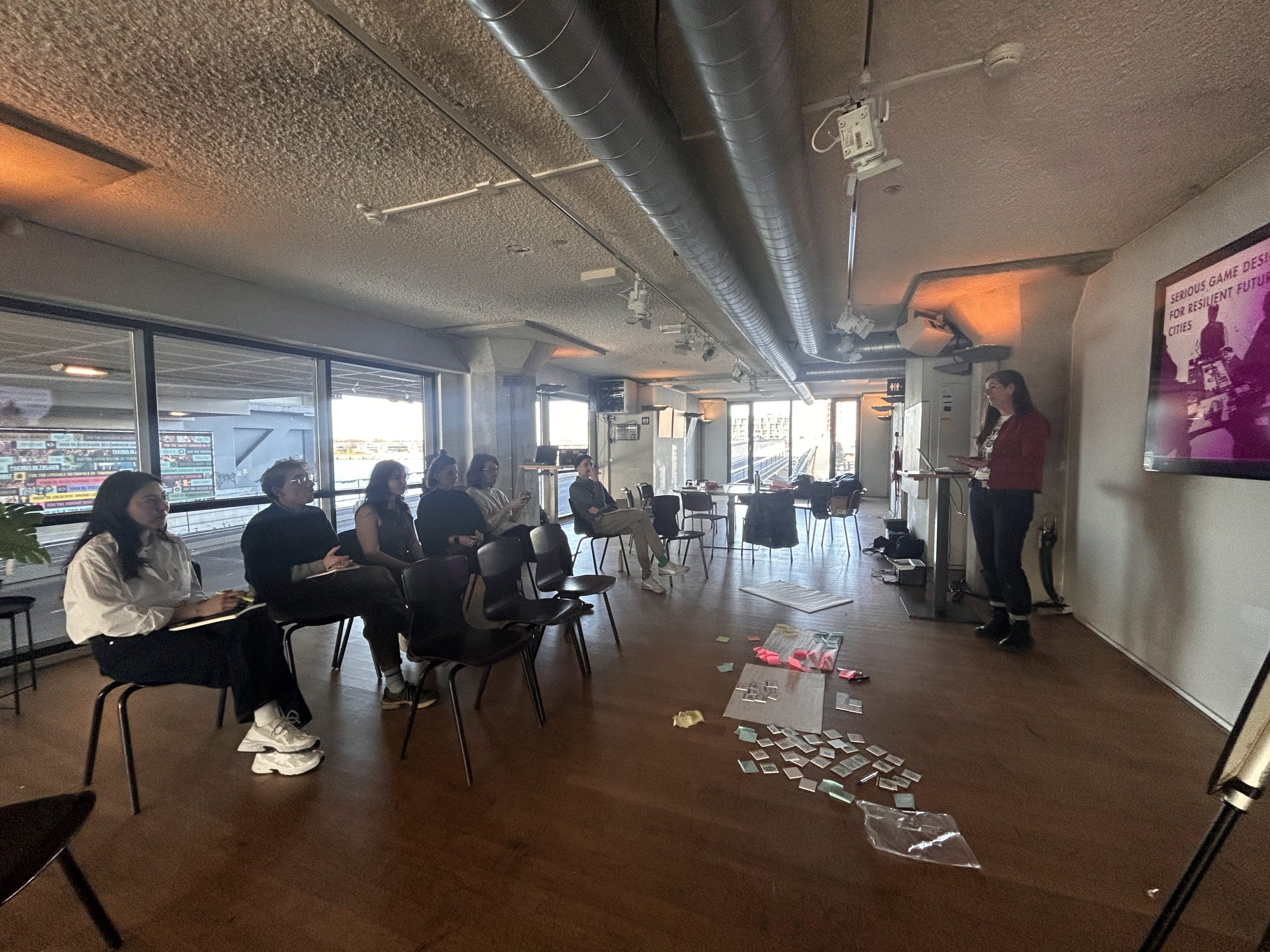
coming from diverse backgrounds, from architecture to performance art, participants brought their own unique objectives to the training, ranging from designing an educational tool for a master-level university course, to creating a game aimed at addressing long-standing urban conflicts in the context of a small German city. This diversity led to an enriched environment, where projects varied in terms of scale, stakeholders, and physical interfaces.
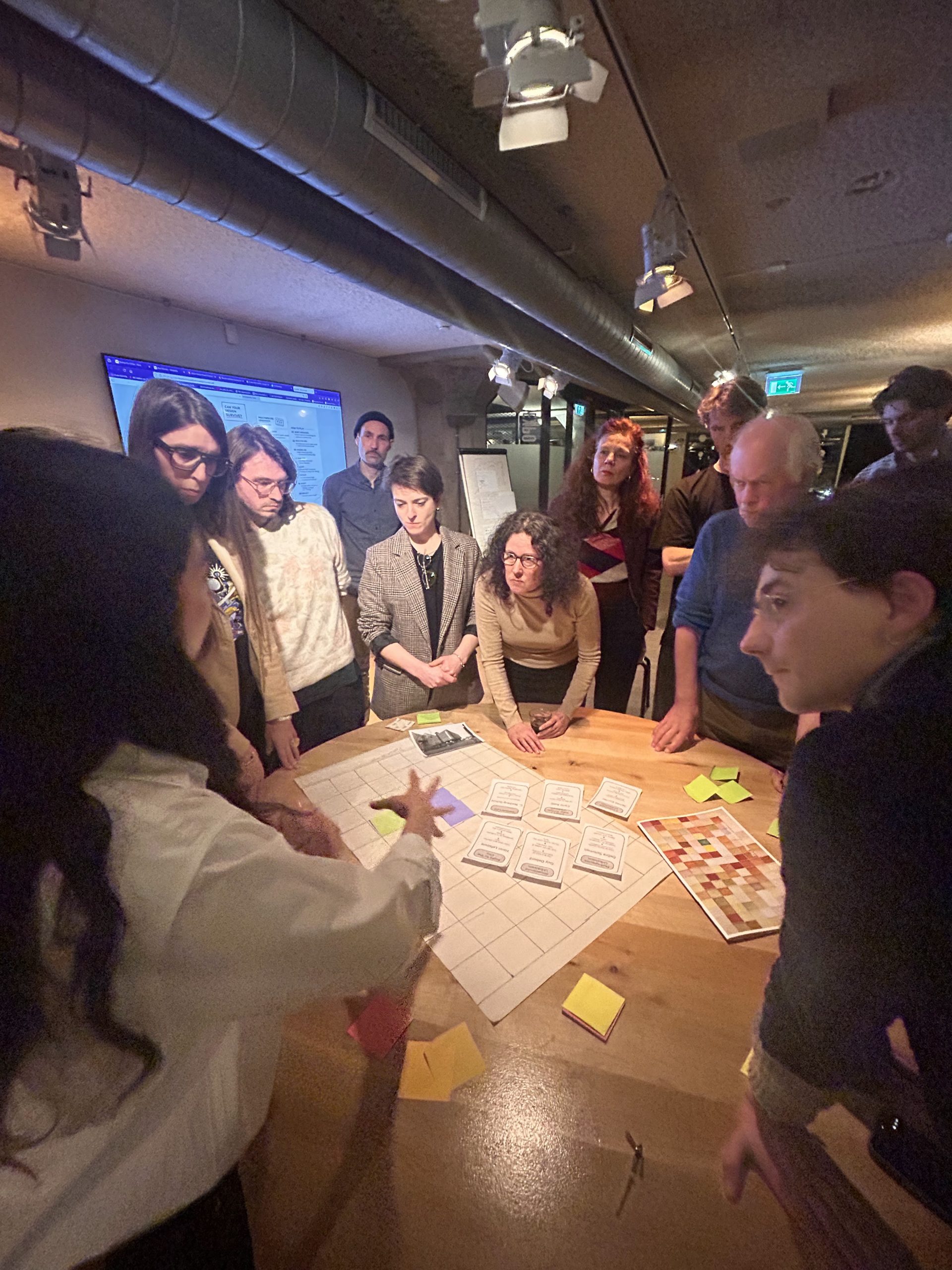
As a key moment in the training, participants engaged with an existing game developed by Game for Cities Foundation, named Eco City Game London. By playing this game, they not only got a better understanding of the game dynamics, but were also able to reflect on how mechanisms, materials and spatial setups as well as rule systems and concepts defined in the game influences players’ experience as well as the underlying message the game conveys. This exercise showed how game design(er)’s role is not neutral, but actively influencing the dialogue formation, power dimension and decision-making process of players during and after the gameplay.
After engaging with an example game and gaining insights from both playing the game and observing materials and process, participants started to develop their own game concepts. This process began with defining their purpose and desired result, as well as the target players. They also decided on the practical elements of their game, such as player’s roles, game rules, scenarios, and physical interfaces. This iterative process continued with several rounds of group discussion and instructor feedback, aiming at developing the idea to reach a prototype phase.
A core aspect of the training was trying to find a balanced scenario for each game concept. Participants were guided to think of playability as well as relatedness and realization of their game scenarios, ensuring scenarios are rooted in real-life situations and based on real conflicts or issues they’re aiming to address, while allowing players to explore and experiment during the game, to achieve more innovative and imaginary solutions. Therefore, games needed to be complex enough to represent the problem properly, but joyful enough to ensure engagement of their audience at a desired level. This needed careful considerations in terms of which actor to empower more, which issues to highlight, and how much complexity to involve in each game scenario.
The training concluded with an open-to-public event in which participants presented their games and tested their first prototypes with external visitors, which provided them with an opportunity to observe and analyze how the general audience reacted and engaged with their game concepts, enabling them to develop their games based on first-hand observation of gameplay sessions.
Overall, the Games for City (GfC) Training showed how game (making) can be considered as an effective methodology, holding strong potential in engaging various and often conflicting stakeholders to work together toward a better understanding of a specific issue. By combining theoretical knowledge, analysis, design, testing, and feedback sharing, the training structure provides enriched learning opportunities and skill developments for the participants. This training has provided a valuable framework for understanding and applying game-based approaches to address urban-related challenges. It has emphasized the role of experimental learning, scenario development, and stakeholder dynamics and highlighted game (making) practices as a promising model not only for one-time workshops, but also for long-term projects, as an evolving and continuous learning trajectory.
The Games for Cities training will return in Fall 2026, from 22–25 September. Stay tuned and make sure to check out the website of Play the City for follow-up information!