What if the tourism & leisure industry could move beyond harm minimization and actively contribute to the thriving communities and ecosystems? That was the overarching question for the two-day event series, titled “The Possibilities for Regenerative Tourism,” which took place on December 10th and 11th 2025.
Organized as part of the ConnACT EU Networks of Towns project, this gathering brought together policy makers, researchers, students, practitioners, and local stakeholders from Piraeus, Bergamo, Prague, Berlin, Fundao, and Amsterdam. Working together to foster bottom-up cooperation, cultural exchange, and sharing of best practices. A two-day event aimed to explore how we can change the paradigm and redesign the tourism & leisure industry towards a force of positive change.
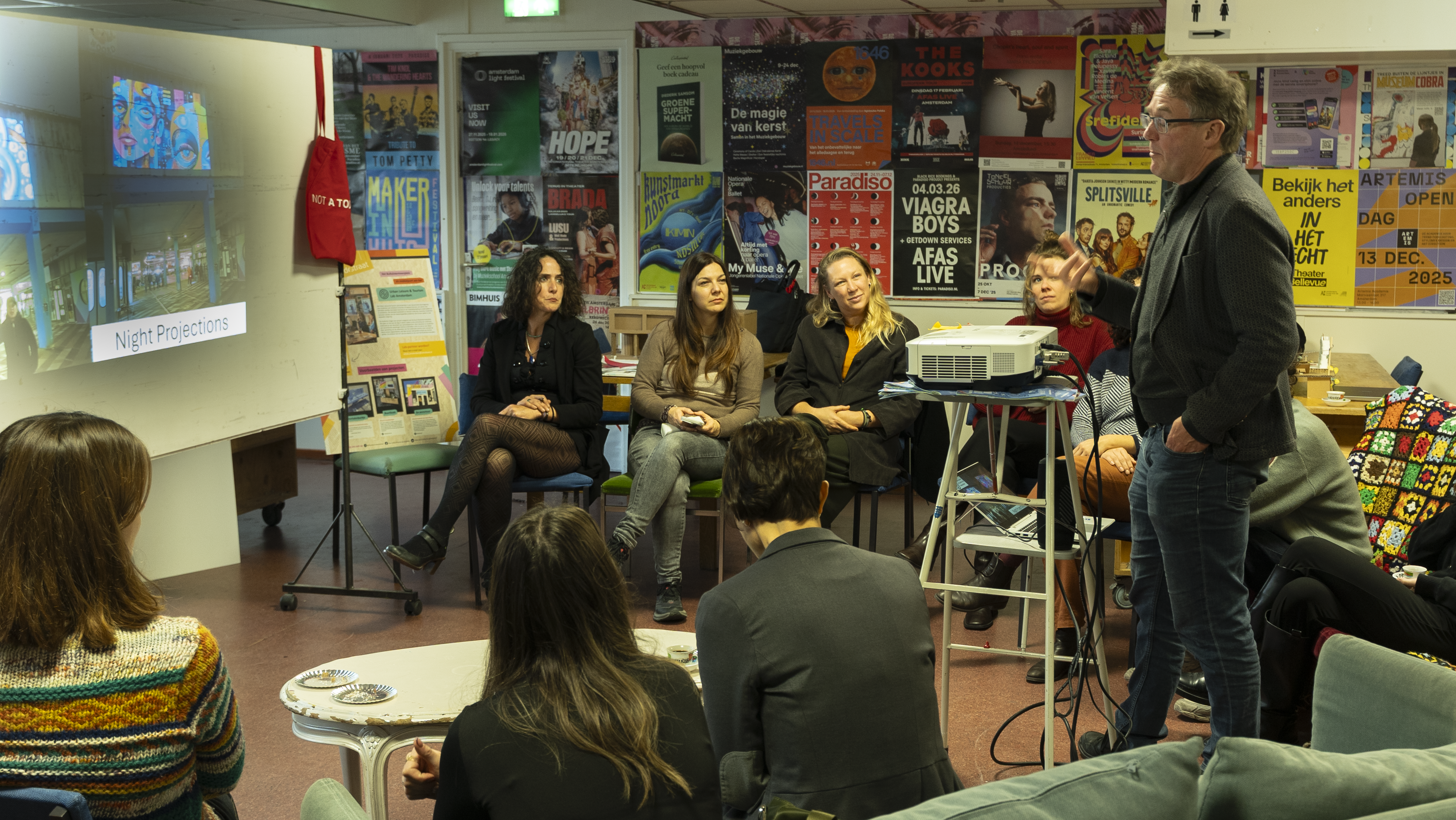
After all, the EU partners managed to get their first event started at Inholland’s Urban Leisure & Tourism Lab in Amsterdam North. A living lab where local stakeholders, organizations, and students come together to explore strategies on a smaller scale that might enable or contribute to this change. After being warmly welcomed with some Eritrean coffee and tea, we started with a presentation about the lab’s mission and origin story. We discussed what regenerative tourism is, how it emerges through collaborative experimentation and place-based design, and discussed importance of the lab by facilitating this experimentation.
By Famke Reijn
After these presentations, by means of a guided tour through Amsterdam North, we got to see for ourselves how Amsterdam is experimenting with regenerative strategies for the tourism & leisure industry. We heard the vivid stories from the Verhalenbank and Buurtboek, initiatives that invite visitors from outside in and, simultaneously, strengthen social cohesion by inviting residents, visitors, and local businesses to work together on these initiatives. Finally, we moved to Café De Ceuvel for dinner, a sustainable social and creative hub where participants reflected on the insights of the day before the upcoming day full of events.
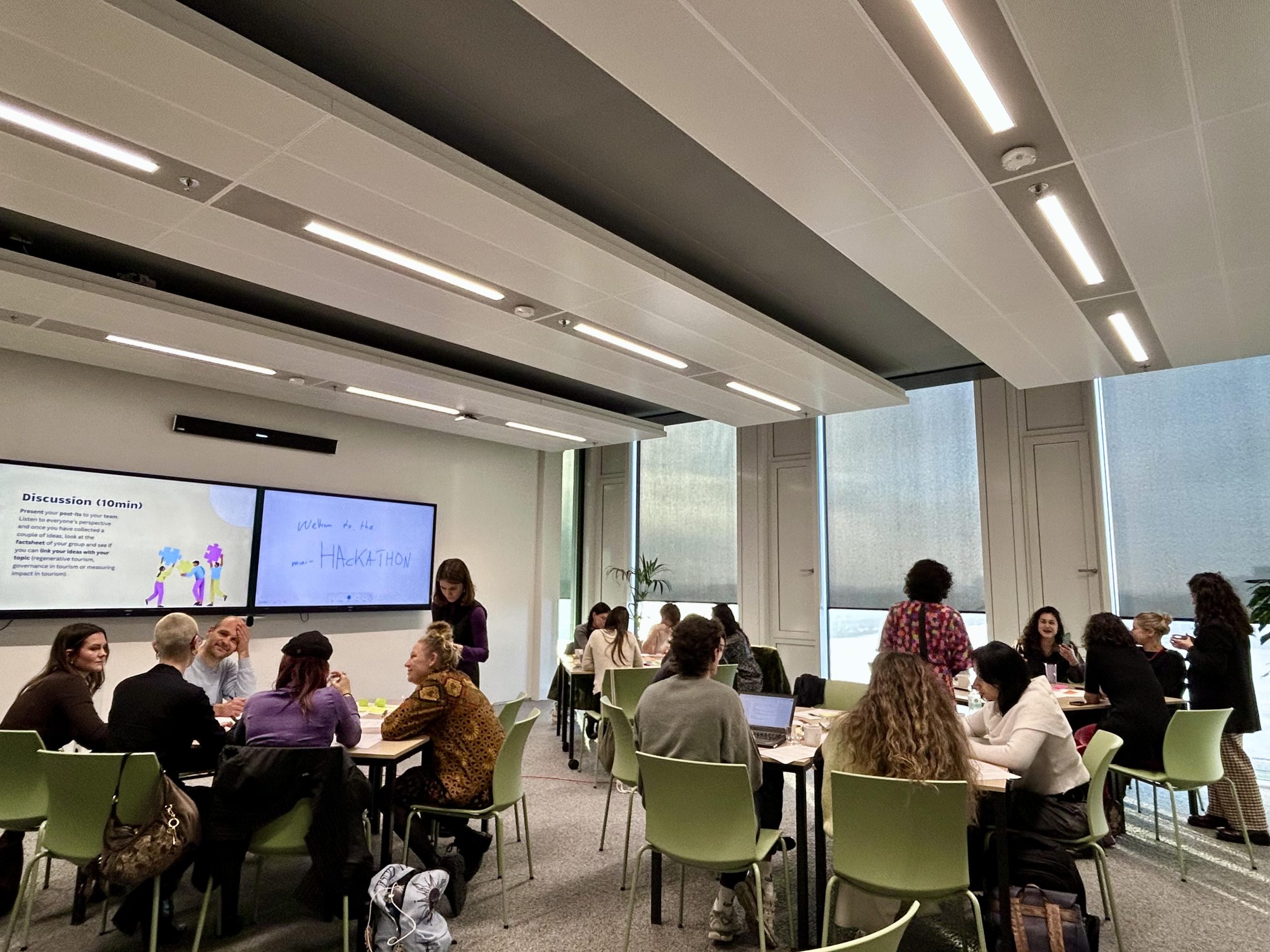
On the second day, all the participants gathered at Inholland University for an open to public mini-hackathon about the challenges and possibilities of AI in the context of regenerative tourism. This mini-hackathon started with two presentations that better familiarized the participants with the concepts of regenerative tourism and artificial intelligence. This hackathon aimed to explore how artificial intelligence could support regenerative tourism objectives by approaching it from a perspective that centers social and ecological well-being, instead of a mere economic one that prioritizes efficiency or the number of visitors. This shift in perspective brought about remarkable and creative ideas. Participants got a deeper practical understanding of how emerging technologies might enable or support us in reimagining a just transition within the tourism and visitor economy. One that is human-centered and emphasizes environmental wellbeing.
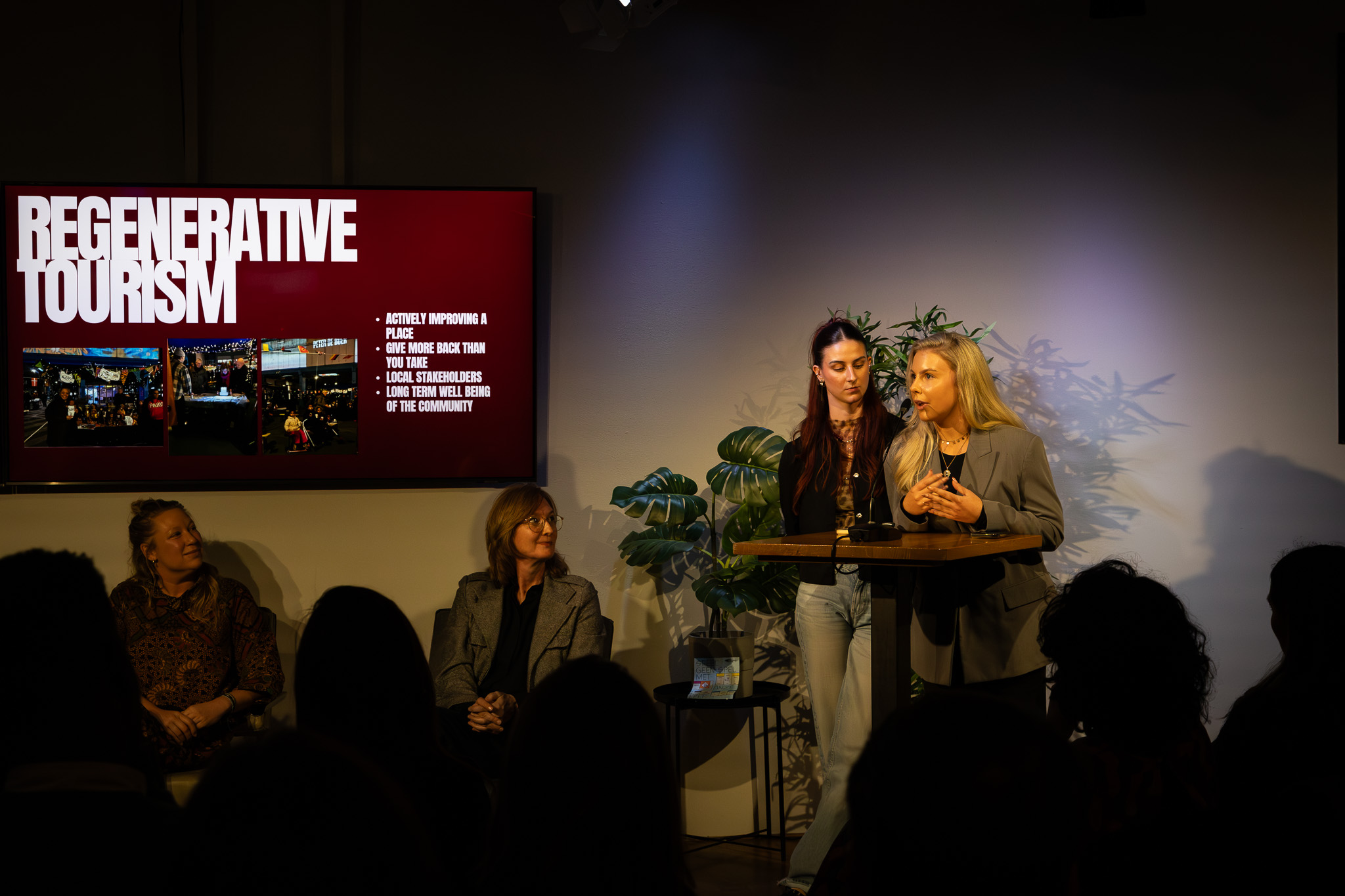
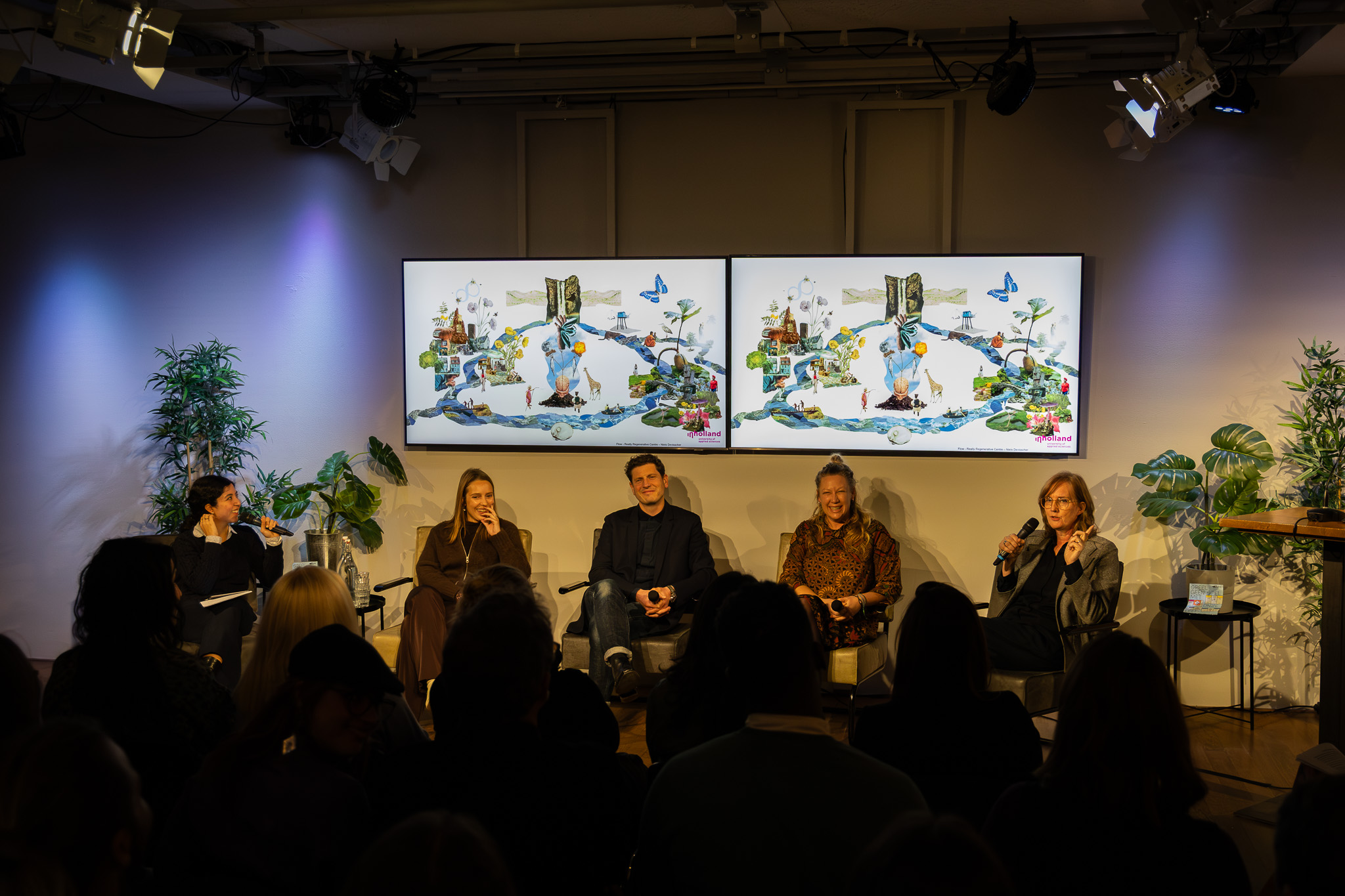
Then finally, after having some rest, the EU members gathered at Pakhuis de Zwijger for dinner and the final event of this two-day program. While reflecting on the insights of the mini-hackathon while also preparing for an open to public and diverse panel with academics, municipal advisors, social entrepreneurs, and student groups. All engaging in a dialogue with a broader audience to discuss how the tourism & leisure industry can become part of the solution rather than a cause of urban problems.
@nomieswerk
An engaging dialogue with one key takeaway being that regenerating the tourism and leisure industry is not going to take a one-size-fits-all solution. It is going to require a multi-stakeholder collaborative approach, with a lot of experimentation, ongoing dialogue, and most of all, well-structured models of co-design with local communities and relevant stakeholders. To ensure that local communal values are accurately captured, an essential condition to design a system that is just and actually empowers local communities and ecological conditions. If you wish to explore or rewatch this dialogue, click here!
 @nomieswerk
If you are interested to know more or wish to engage further with ”The Possibilities for Regenerative Tourism”, make sure to keep an eye out on our website. On October 7th & 8th 2026, we will host a two-day festival full of activities, more information will follow soon!