The green transition promises a just future — but who truly benefits? Oxfam has already shown, during the annual World Economic Forum, that colonial power structures remain deeply embedded in our world economy. From trade agreements to the extraction of raw materials for clean energy, the patterns persist. While wealthy countries are “greening” their growth, nations in the Global South once again bear the burdens. In their Unjust Transition report, Oxfam demonstrates how colonial patterns continue to shape both the impacts of the climate crisis and the ways we respond to it. What does climate colonialism look like today? And more importantly: how can we break free from an economic system that perpetuates inequality?
An evening about power, resources, and the struggle to decolonize the global economy — and to achieve a truly just climate transition.
The event will be held in English.
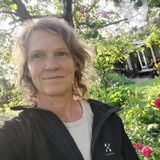
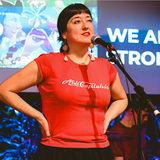

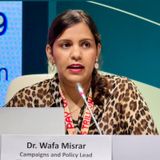


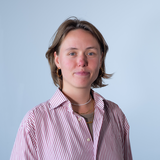
About the speakers
Jacqueline Persson is climate expert working for Oxfam Novib. She specialises in climate policy and advocacy. Alongside her activism, she co-authored several Oxfam reports exploring the links between climate change and inequality, shedding light on how environmental crises deepen economic divides.
Chihiro Geuzebroek is a Bolivian-Dutch artist, climate activist, organizer and co-founder of Aralez. Her work is rooted in decolonial environmental justice, which she expresses through diverse artistic forms and community-led activism. A key medium for her is protest music, which she uses to unite art and activism. In 2013, she directed the documentary Radical Friends, further amplifying voices in the struggle for climate and social justice.
Lena Hartog is researcher, campaigner and trainer working with European climate movements and organizations that strive for ecological and social justice. Together with Anuna de Wever, she made the documentary The Cost of Growth, a film that connects local struggles against extractivism in Serbia, Italy and Sapmi with broader debates on justice, democracy, and our economic system. Next to this, she is PhD candidate at the University of Utrecht, studying transformative power and emotions in social movements.
Anuna de Wever van der Heyden is an activist from belgium — kickstarted the youth for climate strikes in belgium and afterwards went to work with the grassroots collective HOTM in Brussels. she’s worked for multiple civil society organizations and is now working as a freelancer on multiple campaigns and projects. Together with Lena Hartog she co-produced the documentary The Cost of Growth.
Wafa Misrar is a distinguished materials chemist and environmental policy expert, currently serving as Campaigns and Policy Officer at Climate Action Network (CAN) Africa. She leads advocacy efforts aimed at driving meaningful policy reforms and strengthening climate action across the continent. Representing CAN Africa at COP28, she championed equitable climate finance and pushed for systemic solutions to the global climate crisis.
Kenny Gomes is a spoken word artist from Rotterdam whose work bridges poetry, music, and community engagement. Beyond his own performances, he facilitates workshops and has founded several creative platforms – including Poëet Club, Jazz Lounge, Speakeasy, and Spoken Taboos – to nurture emerging voices and celebrate the power of spoken word as a form of social connection and expression.
Joanna Cabello is Head of Research at SOMO. She has broad experience investigating and campaigning around climate, environmental and social justice issues. Before joining SOMO, she researched corporate threats to forest territories, especially climate policy-related ones, while accompanying communities’ resistance processes at the World Rainforest Movement and other organisations.

Billionaire wealth has risen three times faster in 2024 than in 2023. Five trillionaires are now expected within a decade. Meanwhile, crises of economy, climate and conflict mean the number of people living in poverty has barely changed since 1990. Most billionaire wealth is taken, not earned- 60% comes from either inheritance, cronyism, corruption or monopoly power. Our deeply unequal world has a long history of colonial domination which has largely benefited the richest people.

We wisten het natuurlijk allang: we leven in een wereldeconomie waarin uitputting, uitbuiting en uitsluiting de norm zijn. Een systeem waarin niet het welzijn van mens en planeet vooropstaat, maar ongebreidelde economische groei, bedrijfswinsten en de belangen van private investeerders en aandeelhouders. Dat een partij als de VVD hier inmiddels vol overtuiging voor uitkomt, geeft de schrijnende onrechtvaardigheden in elk geval een eerlijke dimensie.

Eerder schreven we over de sporen van het koloniale verleden in ons werk, bijvoorbeeld over de manier waarop economische ongelijkheid in stand wordt gehouden. Die sporen zijn ook terug te vinden in andere thema's waar wij op werken, zoals de klimaatcrisis.

The global energy transition stands at a pivotal moment: it can either dismantle the inequalities driving the climate crisis or deepen them. Today, the transition risks reproducing patterns of extractivism and exploitation, with the most marginalized paying the highest price while elites profit. From transition mineral mining to debt burdens and unequal energy access, the current trajectory mirrors centuries of colonial injustice. A just transition must redistribute power and resources, curb overconsumption, and prioritize dignity and rights for all. This report outlines pathways to build an energy system grounded in equality, justice, care and collective wellbeing —where energy serves life, not profit.
Kolonialisme alleen iets voor de geschiedenisboeken? Toch niet, want de gevolgen ervan zijn nog steeds merkbaar. In de klimaatcrisis, onze economie en óók in ons eigen werk. Tijd om te dekoloniseren dus!

Bekijk hier de website van de film The Cost of Growth, een film van Lena Hartog en Anuna de Wever.
How a powerful few are locking the world into disaster.