Urban Recovery is a concept that goes beyond the physical recovery of an urban area. The Urban Recovery Framework is an instrument that uses an integrated approach which, besides meeting immediate needs, also lays the foundation for long-term resilience. Humanitarian aid brings immediate relief, participatory change and community empowerment, yet it risks overlooking issues related to permanence and inclusivity. Simultaneously, the urbanist approach risks paralysis in the face of crisis, posing a threat not only to its own long-term goals, but worst of all, failing to meet the vital needs of its citizens today.
Can the humanitarian and urban tradition collide, strengthen each other’s shortcomings, and provide models of recovery to which a community is not subjected but actively contributes? Do strategic reactions always need to be organized and implemented in a top-down manner, or is there great added value in stimulating bottom-up local initiatives from the communities themselves?
This tension between urgency and long-term vision lies at the heart of the Urban Recovery debate. That’s why, in the program Agencies of Urban Recovery, in collaboration with the organizations Civic and AREAC from the humanitarian approach, and Ro3kvit and Play the City from the urban approach, we will explore how their perspectives can meet, challenge and strengthen each other. Therefore, the central question in this program is not simply ‘’How do we rebuild after crisis?’’ but rather ‘’How do crises accelerate new models of city-making that combine humanitarian, ecological, and civic innovation?’’.
 Play the City is an organization that turns complex urban challenges into collaborative games with the aim of bringing policymakers, market actors, and citizens together to develop sustainable solutions for urban challenges.
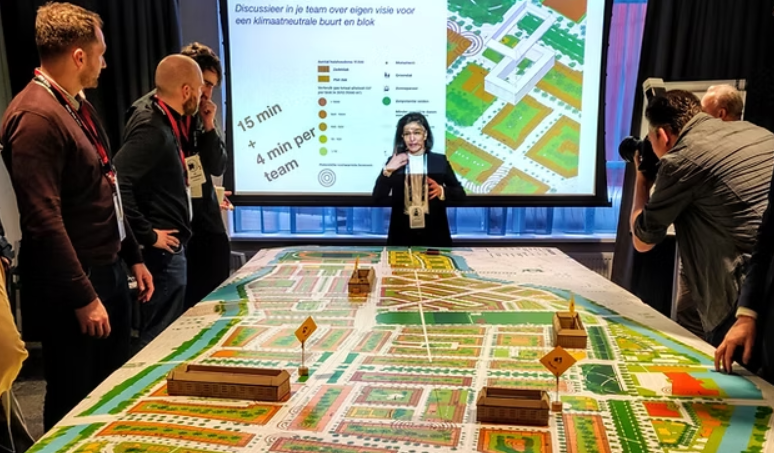
In a recent initiative, The Chernivtsi Civic Action Game, together with Ro3kvit and AREAC, Play the City set up a collaborative simulation to explore an inclusive civic ecosystem for Chernivtsi; a city in Ukraine that has become one of the most important destinations for people fleeing the war, and where, as of now, one in seven residents is a displaced person.
During gameplay, participants are challenged to co-create strategic responses that address both immediate needs and long-term civic ambitions. The playful approach breaks through professional jargon and mistrust, creating common ground. It turns complex policy documents and datasets into accessible tools for dialogue, enabling effective communication and motivating expert and non-expert to act together. The game has proven to enhance participants’ sense of shared responsibility and agency in shaping the future of Chernivtsi’s civic life while simultaneously addressing its immediate needs.
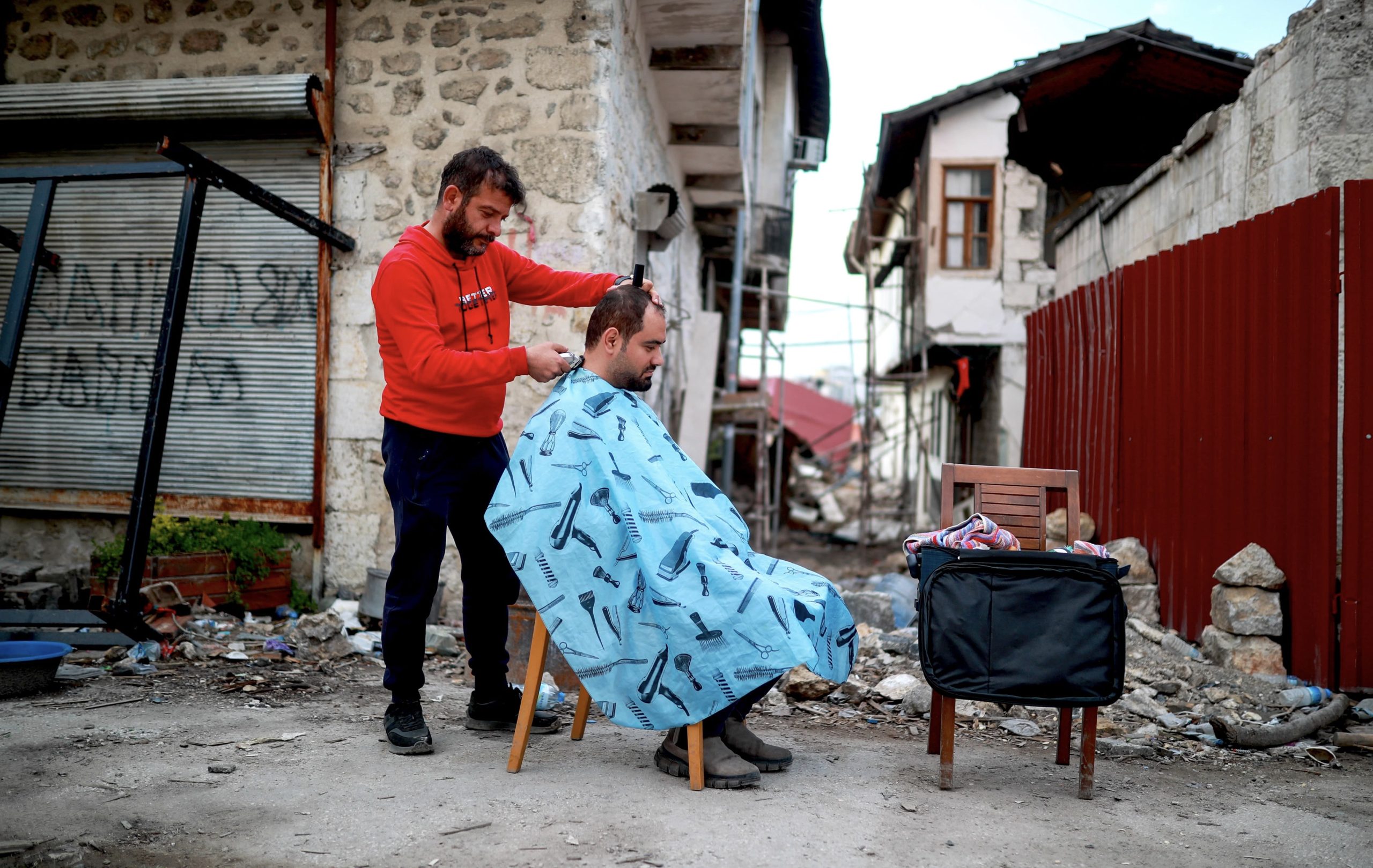 Civic operates as an open-source, R&D-style platform for social change on a global scale. Describing itself more as a movement than an organization, Civic connects community-led projects from Kabul to Nairobi, to London and beyond. Rather than working from the top down, Civic fosters an open network for collective, bottom-up transformation through local non-governmental initiatives, helping them establish a shared purpose and drive social change from the ground up.
In the aftermath of the February 2023 earthquakes in Syria and Turkey, it became clear that rebuilding what once was would not be enough; there is a vital obligation to design differently for future generations. After spending time with diverse residents, community leaders, agencies, and local governments, Civic observed that a sense of abandonment had become the dominant narrative. People were longing for purpose and, although civil society was alive and growing, it lacked a shared vision and coordinated plan.
In response, Civic organized citizen-led assemblies, bringing together civilians, community leaders, local government officials, and aid organizations to co-create a collective mandate; a shared vision for recovery in which the community determines what is most important in the rebuilding process. By introducing a Future Generation Trust, Civic also established a structure that enables communities to participate directly in investment decisions, ensuring that recovery efforts are guided by the people themselves.
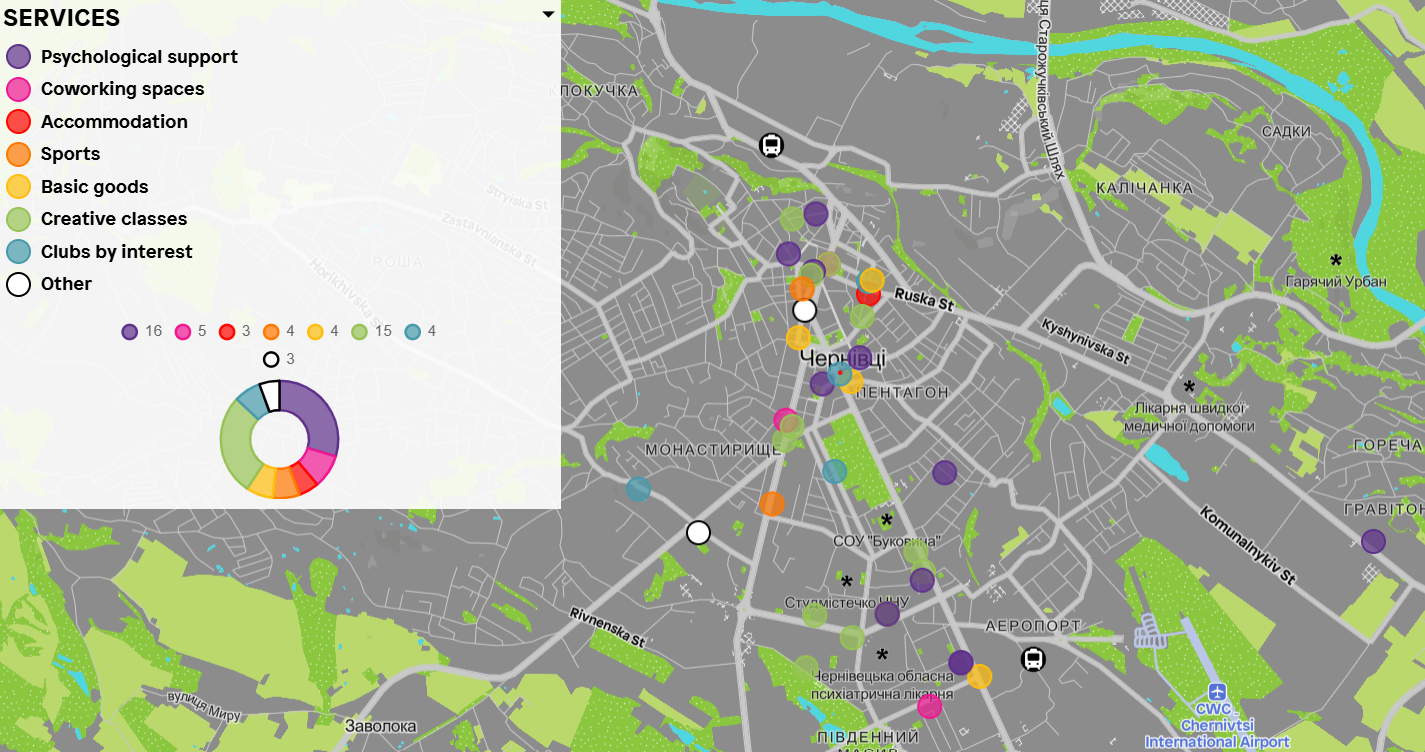 AREAC is an NGO that has been working in Western Ukraine since 2008 in the fields of local community development, international partnerships and educational & healthcare initiatives. In 2024, it implemented the largest Survivor and Community-led Crisis Response (SCLR) program, aimed at encouraging and supporting communities affected by crisis to identify and implement their own initiatives that can immediately improve their wellbeing. This not only creates a strong sense of agency but also strengthens social cohesion and collective responsibility within the community.
In collaboration with Play the City and Ro3kvit, their latest project: The Interactive Map of Public Support of Chernivtsi, hosted on the Poruch Platform, provides residents of Chernivtsi with information about free support offered by non-governmental organizations in the city. These forms of support include creative activities, courses, training for children and adults, psychological assistance, distribution of food and clothing among many others. The platform functions as an interactive, community-organized bulletin board; an initiative that empowers residents to organize, implement and share information about bottom-up public initiatives that directly contribute to their own and their fellow citizens’ wellbeing in times of crisis.
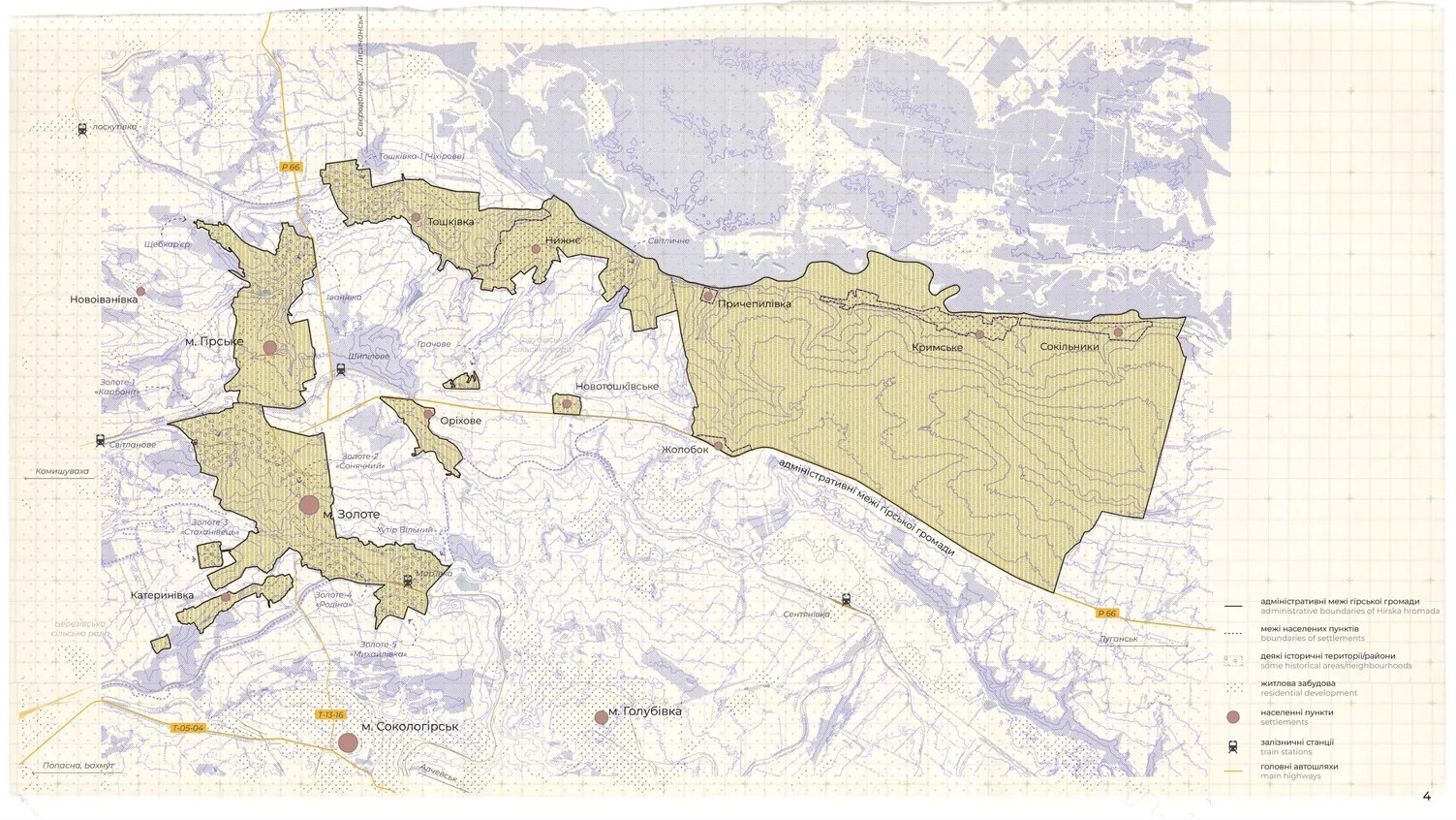 Ro3kvit is a coalition of 100 professionals from Ukraine and beyond who have united to develop knowledge and methodologies for rebuilding Ukraine’s urban & rural areas and infrastructure. With a focus on holistic solutions, they aim to integrate the spatial, economic, and social dimensions of planning that are grounded in context, dialogue, and most importantly, participation. Every project is developed in cooperation with local teams in order to respond appropriately to urgent challenges and to transform the short-term needs into long-term sustainable strategies.
At the request of the Hirska community, a community currently displaced due to Russian occupation since the beginning of the war, Ro3kvit has supported their efforts to plan and strategize for the future despite ongoing uncertainty. For a displaced community, planning becomes even more essential to ensure a swift recovery in the post-war period, taking into account different possible scenarios. This strategy not only addresses physical needs but also incorporates a deep understanding of collective memory, ensuring that recovery plans meet the real needs of the community, increase residents’ participation, and, above all, maintain social cohesion despite being displaced.
Are you interested in exploring new ideas of Urban Recovery, forms that integrate humanitarian needs, ecological concerns and civic innovation? Then make sure to join us on October 22 for the program Agencies of Urban Recovery.