The Dutch government and the King have formally apologised for the Netherlands’ role in transatlantic slavery and the slave trade. But apologies are only words. How do we move from recognition to structural repair? And who decides? Join us for a future-defining evening that bridges academic theory and social reality. Professor Sir Hilary Beckles, chair of the CARICOM Reparations Commission, gives the keynote for ‘Reparations: A Dialogue of Decency’. He makes the historical, economic and legal case for decolonisation and reparative justice as a constructive path to global justice.
After the keynote, Sir Beckless is joined by, Dr. Nozizwe Dube and Prof. Dr. Wayne Modest, for a dialogue on what genuine repair requires.

More of about the speakers
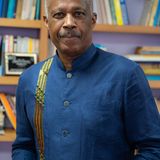
Professor Sir Hilary Beckles is an internationally renowned historian of Barbadian descent, Vice-Chancellor of The University of the West Indies, Chair of the CARICOM Reparations Commission and a member of the Advisory Board of the Cowrie Atlantic Foundation. He is globally recognised as one of the foremost academic and political leaders in the reparative justice movement. Due to his crucial role in securing the UN resolution that designates transatlantic slavery as the “worst crime against humanity,” in 2026 he was also appointed by John Mahama, President of Ghana, to the ‘International Committee on Reparations’.
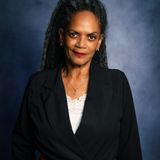
Dr. Nozizwe Dube, legal scholar and Max Weber Postdoctoral Fellow at the European University Institute (EUI) in Florence, specializes in EU law, Black Feminism and Critical Race Theory.
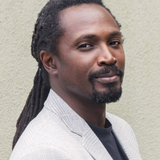
Prof. Dr. Wayne Modest, Content Director of the Wereldmuseum, Professor by Special Appointment at Vrije Universiteit, and Head of the Research Center for Material Culture (RCMC). Moderator Aldith Hunkar leads the discussion.